

The Human Side of Fraud: Why Smart People Fall for Scams
Introduction
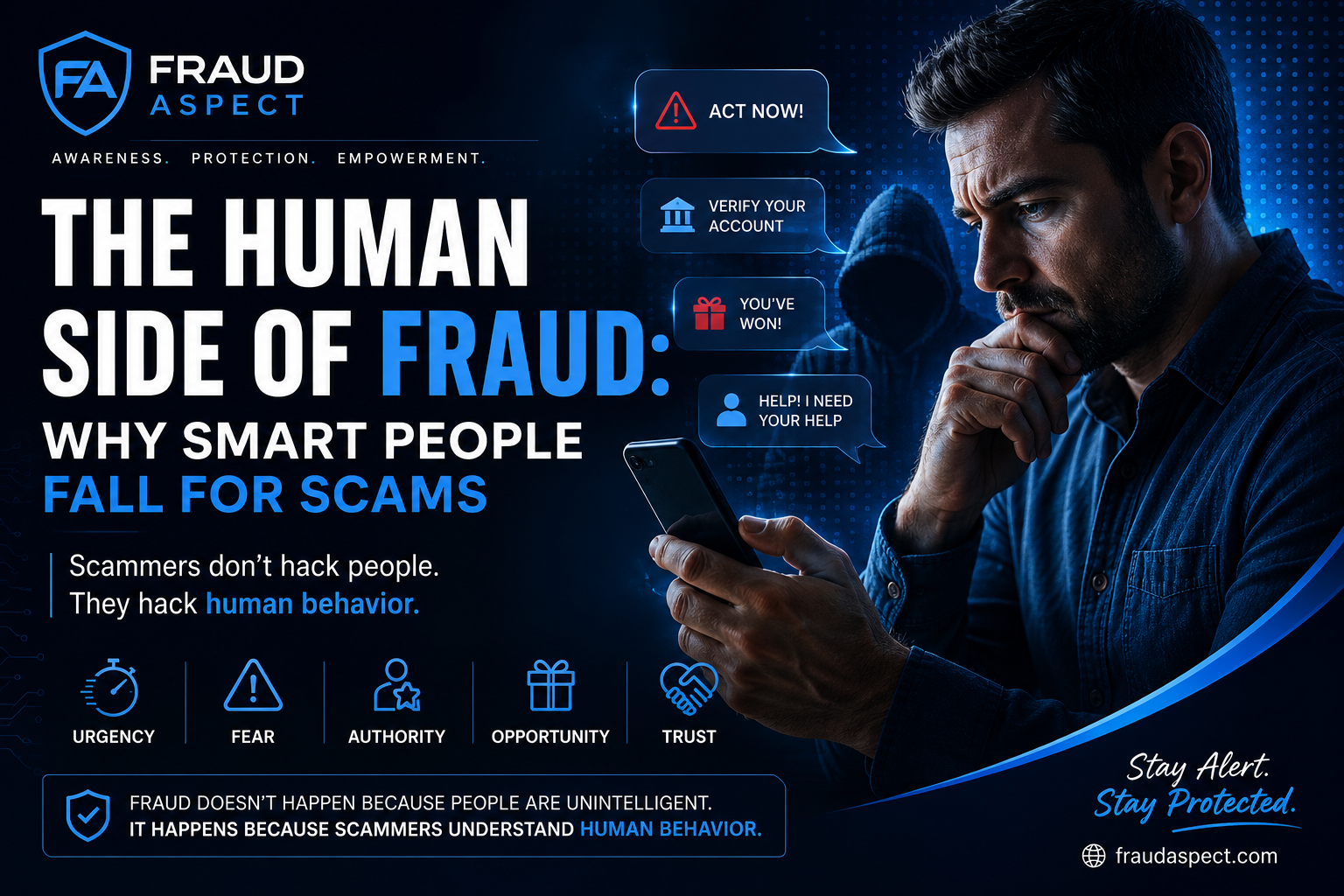
Many people assume fraud victims are careless or uninformed. The reality is far different. Fraudsters succeed because they understand human behavior, emotions, and decision-making. Scams are designed to create urgency, fear, trust, or excitement—emotions that can override even the most cautious person’s judgment.
Common Psychological Triggers
Urgency (“Act now!”)
Fear (“Your account is compromised”)
Authority (“This is your bank calling”)
Opportunity (“You’ve won a prize”)
Trust (“I’m a family member in trouble”)
Why Awareness Matters
Fraud prevention is not just about technology. It’s about recognizing manipulation before it leads to financial loss.
Key Takeaway
Fraud doesn’t happen because people are unintelligent. It happens because scammers understand human behavior. Awareness is one of the strongest defenses.